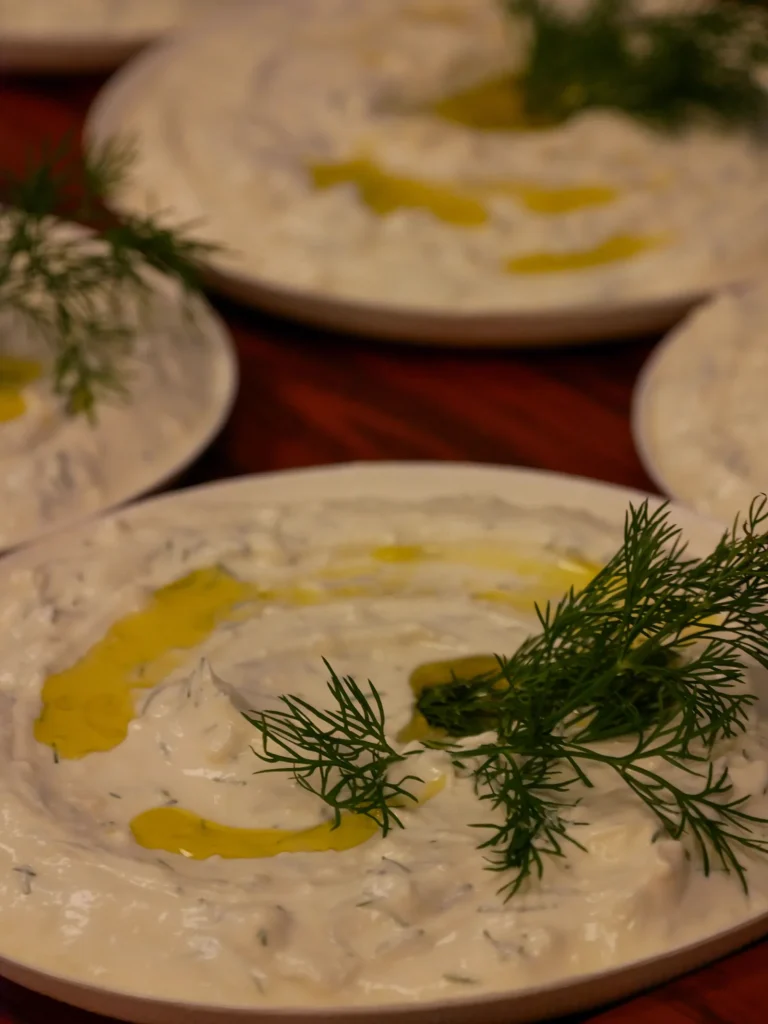
Tzatziki is the simplest recipe on this site and the one most often made wrong. It has four ingredients, and three of them decide whether you end up with a watery sauce or a cream. The olive oil is the fourth — and the only one you can still ruin afterwards, by using a cheap one.
Serves 4 as a side. 15 minutes of work, 30 minutes of waiting.
| Amount | Ingredient |
|---|---|
| 500 g | Greek yoghurt, 10 % fat |
| 1 | Cucumber, medium (about 400 g) |
| 2–3 cloves | Garlic |
| 3 tbsp | Extra virgin olive oil, plus more to serve |
| 1 tbsp | Red wine vinegar or lemon juice |
| 1 tsp | Salt (plus 1 tsp extra for the cucumber) |
| — | Fresh dill or mint, optional |
Important: full-fat yoghurt. Low-fat yoghurt splits the moment salt and cucumber water join it.
Wash the cucumber, halve it lengthways and scrape out the seeds with a teaspoon. Grate coarsely, put it in a clean tea towel, sprinkle with 1 tsp of salt and wring the cloth hard. Leave it for at least 10 minutes, then press again. 400 g of cucumber becomes about 200 g — that is the whole trick.
Grate two cloves finely, or crush them to a paste with the back of a knife. Do not chop: chopped garlic stays detectable in the cream and turns sharp over time. Add a third clove if you like it stronger.
Put the yoghurt in a bowl, fold in the squeezed cucumber, then add the garlic, vinegar and a pinch of salt. Stir smooth with a spoon or a whisk — not with a blender, or the cream turns liquid.
Stir in 3 tbsp of olive oil slowly until the cream shines. Cover and refrigerate for 30 minutes. In that half hour the garlic mellows through, the cream sets and it tastes noticeably rounder.
Check the salt again before serving — cucumber and yoghurt swallow salt. Press a hollow into the middle with the back of a spoon, pour in a tablespoon of olive oil and scatter dill over it. The oil stays visible that way instead of running into the cream.
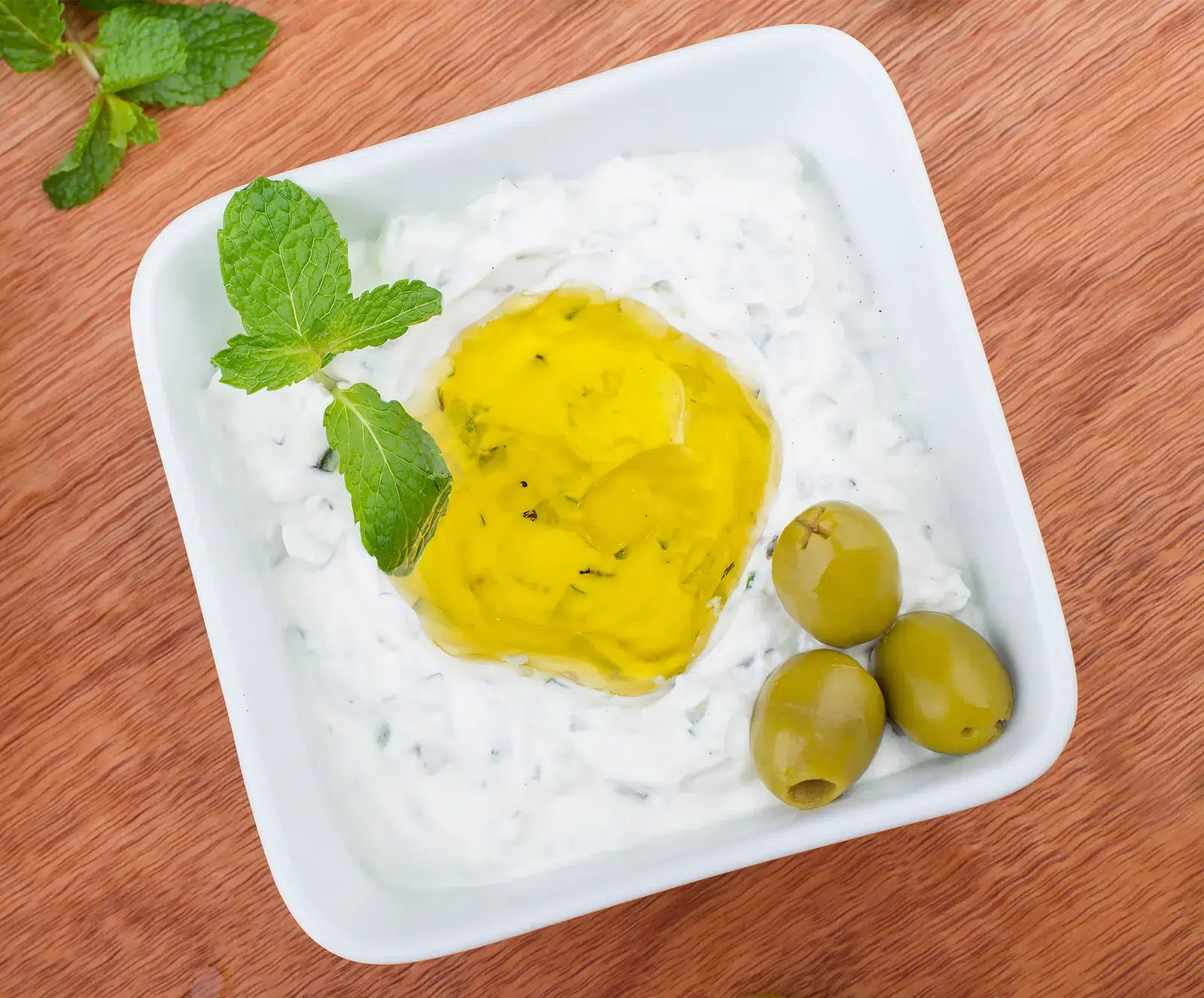
Tzatziki is never cooked. The oil goes in raw and is never heated again, so there is nothing to hide a mistake behind. An oil with real bitterness and a little pepper at the back holds its own against garlic and yoghurt and turns a side dish into a dish. A mild, neutral oil simply disappears.
Ours is the 500 ml Koroneiki bottle — for cold cooking, not for frying.
Two days in the fridge, covered. On the second day it turns sharper and slightly looser — stir before serving and refresh with a fresh spoonful of oil. Do not freeze it: the yoghurt splits on thawing.
The cucumber was not drained enough. Salt it, leave it 10 minutes and squeeze it in a cloth — that is the difference between a cream and a sauce.
Yes, as long as it has at least 10 % fat. Skyr does not work: too little fat, too much protein, and the result turns dry.
Classically with. In Greece the oil on top is part of the recipe, not decoration.