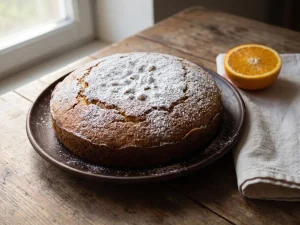
Vasilopita Recipe: Greek New Year’s Cake with Olive Oil
Vasilopita the Greek way: a moist New Year’s cake with olive oil, orange and cinnamon, baked with a
Fifteen recipes in which olive oil is not a side note: from a bowl of tzatziki to a slow-baked moussaka, from beans in tomato sauce to a lemon cake. All of them belong to traditional Greek cooking — dishes that appear on the table regularly, not only on holidays.
Every recipe states how much oil the dish actually needs and why. Quantities are given in grams and millilitres, timings assume a standard oven, and ingredients that are hard to find outside Greece are either explained or replaced with something you can buy locally.
Vasilopita the Greek way: a moist New Year’s cake with olive oil, orange and cinnamon, baked with a
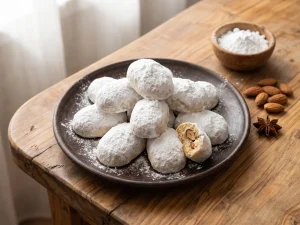
Kourabiedes the Greek way: crumbly butter and almond cookies with brandy, generously dusted with icing sugar. Makes 30–35,
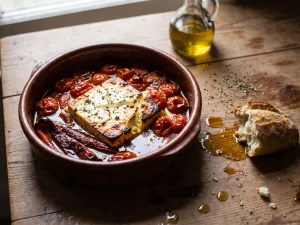
Bouyiourdi the Greek way: a block of feta baked with tomatoes, peppers and chilli in olive oil, served
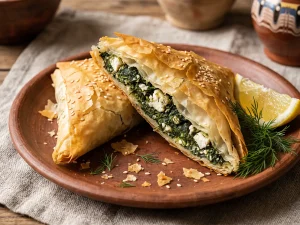
Spanakopita as a tray bake: filo brushed with olive oil, filled with spinach, feta and dill. Crisp, make-ahead
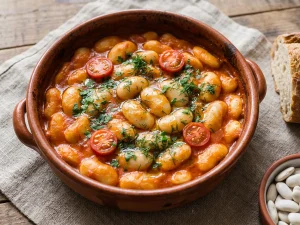
Gigantes plaki the Greek way: giant white beans baked with tomatoes, herbs and plenty of olive oil. Serves
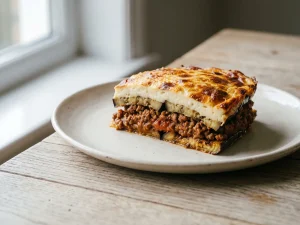
Moussaka the Greek way: aubergines fried in olive oil, slow-cooked minced meat sauce with cinnamon and allspice, topped
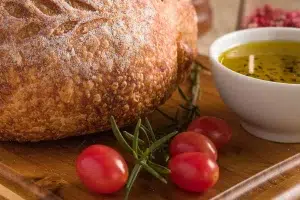
Three olive oil dips in five minutes: lemon-garlic for bread, herb oil for vegetables, and a marinade for

Gemista the Greek way: peppers and tomatoes stuffed with rice, herbs and potatoes, baked in tomato and plenty

Greek olive oil lemon cake with lemon syrup: stays moist for days, needs no butter and 20 minutes
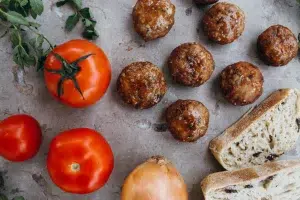
Keftedes the Greek way: minced meat with mint and parsley, shaped and fried in olive oil. About 20
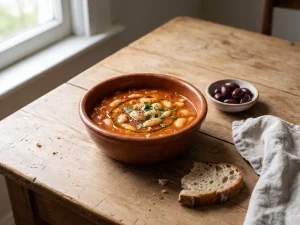
Fasolada the Greek way: white beans with tomato, carrot and celery, finished with raw olive oil. Vegan, serves
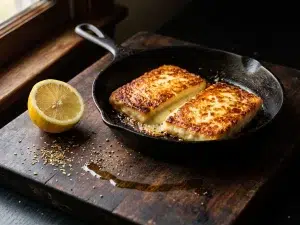
Saganaki the Greek way: firm cheese dusted in flour, fried golden in olive oil, served with lemon and
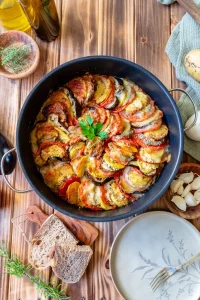
Briam the Greek way: aubergine, courgette, potato and tomato in slices, baked for 80 minutes with plenty of
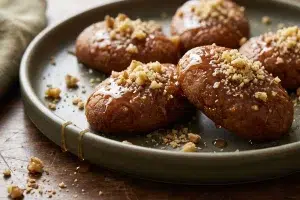
How to bake melomakarona: oval honey cookies with orange, cinnamon and walnuts, made with olive oil instead of
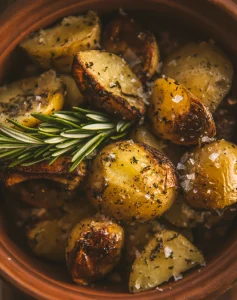
Oven potatoes that actually turn crisp: parboiled, roughed up, tossed in olive oil with oregano and lemon.
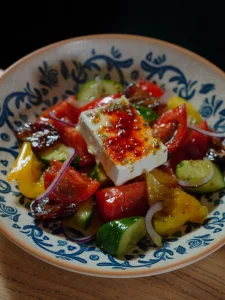
Horiatiki done right: ripe tomatoes, cucumber, onion, olives and feta — no lettuce, no dressing.

How to make tzatziki properly: grated cucumber, drained yoghurt, garlic and good olive oil. Ready in 15 minutes,

Baked Feta with Olive Oil – The Classic Greek Appetizer Baked feta with olive oil (Boujourdi) straight from
Which olive oil for which dish?
| Dish | Oil | Why |
|---|---|---|
| Frying, braising, oven vegetables | Extra virgin olive oil, 1 L See the 1 litre bottle | Medium fruitiness, heat-stable — survives 45 minutes in the oven without turning bitter. |
| Cold sauces, salads, dips | Extra virgin olive oil, 500 ml See the 500 ml bottle | Fresh and aromatic; never heated, so the flavour stays intact. |
| Baking: cakes, biscuits, filo | Extra virgin olive oil, 1 L See the 1 litre bottle | Mild enough for cake batter, keeps bakes moist and filo crisp. |
| Finishing at the table | Tasting set (3 × 500 ml) See the trio set | Three pressings to compare — for feta, soups and raw use. |
Cooking with olive oil: five questions
Which olive oil is best for frying?
Extra virgin with medium fruitiness. What matters is not the smoke point alone but the polyphenol content: a freshly pressed oil handles 180 °C better than an older bottle.
Can you bake with olive oil?
Yes — Greek baking has relied on it for centuries. For cake batters use a mild oil and about a quarter less than the butter weight, since olive oil is liquid. The cake stays moist longer.
How much olive oil does a dish need?
Greek recipes use 60 to 150 ml for four people. Some stays in the tin, some is absorbed by the vegetables. Using far less gives you a drier dish, not a lighter one.
How do you recognise good olive oil?
Three things: a harvest date rather than only a best-before date, a clear origin, and a bitter, slightly peppery finish. Oil that tastes only mild and neutral is usually old or blended.
How should olive oil be stored?
Dark, cool, tightly closed and away from the hob and the window. More important than temperature is turnover: a 1 litre bottle suits a household better than five litres, because oil oxidises once opened.